March 26, 2026, has emerged as a landmark inflection point for the global energy storage industry, with a wave of transformative announcements spanning technology commercialization, landmark policy funding, record-breaking grid projects, and cross-border standardization initiatives. These developments solidify energy storage’s role as the foundational backbone of the global renewable energy transition, with tangible, market-moving progress across every major regional market worldwide.
Sodium-Ion Storage Hits Critical Commercial Maturity With Performance & Cost Leap
On the technology front, a leading Chinese energy storage manufacturer has officially launched its next-generation sodium-ion battery storage system for full commercial deployment. The upgraded system delivers a 15% uplift in energy density over its prior generation, a rated cycle life exceeding 8,000 full charge-discharge cycles, and a roughly 20% reduction in total system costs. This milestone marks a pivotal threshold for sodium-ion technology, confirming it has reached the technical and economic maturity required for large-scale stationary storage applications globally.
European Commission Approves €5 Billion Energy Storage Accelerator Initiative
In a landmark policy move for the European market, the European Commission has formally greenlit a sweeping €5 billion funding package under its newly established “European Energy Storage Accelerator” program. The financing will be prioritized across three core pillars: utility-scale battery storage deployments, research and development for long-duration energy storage (LDES) technologies, and the buildout of a unified pan-European battery recycling network. The initiative is designed to strengthen Europe’s domestic energy autonomy, boost grid stability amid rising renewable penetration, and reduce strategic reliance on concentrated global supply chains.
North America’s Largest Hybrid Grid Storage Project Completes Commissioning in Texas
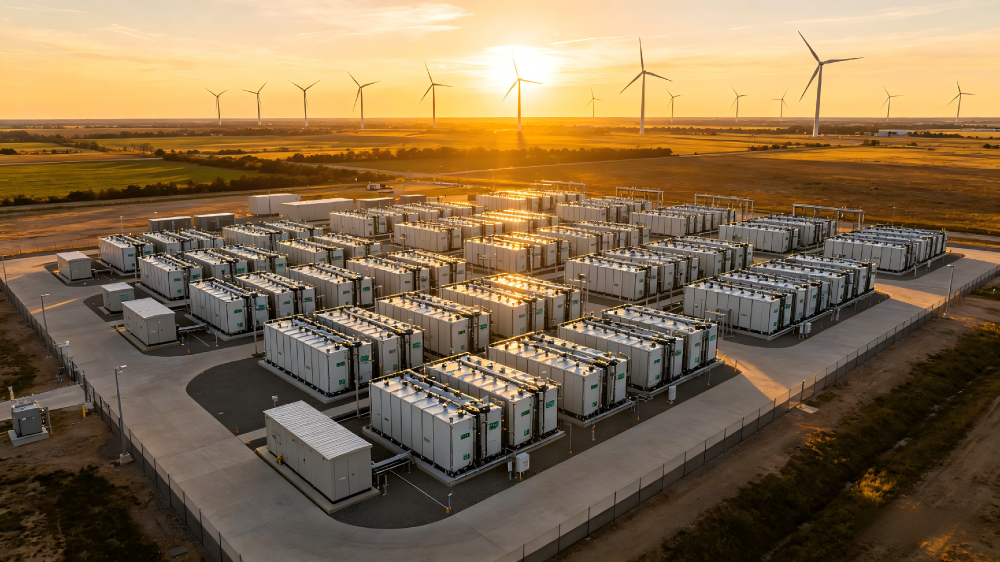
In the North American market, the continent’s biggest grid-scale hybrid energy storage facility has successfully finished grid connection and full commissioning testing in Texas. The project boasts a total capacity of 1.2 GWh, pairing advanced flow battery technology with high-performance lithium-ion systems in an optimized hybrid architecture. It is capable of delivering up to six hours of consistent peak-shaving services, drastically improving renewable energy curtailment reduction and grid resilience across the ERCOT market, which serves nearly 90% of Texas’ electricity demand.
IEA Report: Global Storage Capacity Surges 40% YoY, Led by Distributed Segments
New dedicated analysis from the International Energy Agency (IEA) has quantified the sector’s explosive growth, with global operational electrochemical energy storage capacity posting a 40% year-on-year increase compared to early 2025 levels. The report highlights that commercial & industrial (C&I) and residential storage segments have expanded far faster than prior industry forecasts, now emerging as the primary engines of global market growth. This accelerating deployment is being fueled by sustained declines in system costs and increasingly supportive policy frameworks across all major global markets.
Global Tech Coalition Launches Open Storage Interface Protocol for Grid Interoperability
A coalition of leading global energy technology firms has unveiled a groundbreaking industry initiative: the Open Energy Storage System Interface Protocol. The unified framework is designed to standardize communication and data exchange between energy storage assets and energy management platforms, reducing system integration complexity, accelerating interoperability with smart grids and virtual power plant (VPP) networks, and unlocking more efficient energy orchestration across distributed storage fleets worldwide.
Australia Commissions First Decommissioned Coal Mine Repurposed CAES Project
In the Asia-Pacific region, Australia has successfully commissioned its first compressed air energy storage (CAES) demonstration project, built entirely within repurposed underground tunnels of an abandoned coal mine. The facility stores high-pressure air in the subterranean mine voids, releasing it to generate electricity during peak demand periods. This innovative approach delivers a replicable blueprint for large-scale energy storage using decommissioned industrial sites, while creating a viable economic transition pathway for former coal-producing regions.
LFP Cathode Capacity Expands Amid Global Push for Stricter Storage Safety Standards
On the supply chain and regulatory front, multiple global raw material suppliers have announced major capacity expansions for lithium iron phosphate (LFP) cathode production, aimed at meeting surging global demand for LFP-based storage systems. In parallel, recent global industry conferences have centered on tightening universal energy storage system safety standards, with discussions focused on stricter real-time online monitoring requirements, thermal runaway early warning protocols, and enhanced certification mandates. Safety remains a top industry priority as deployments scale rapidly across utility, commercial, and residential sectors.
Collectively, these announcements underscore the energy storage sector’s rapid evolution from a niche supporting technology to a core pillar of the global energy system, with cross-regional momentum set to drive continued accelerated growth through 2026.
Welcome to contact us:
Inquiry more product details from the : Lithium Ion Battery Manufacturers
WhatsApp/Wechat/Mobile: +86 13332949210
Email: info@xihobattery.com
Website: www.xihobattery.com 
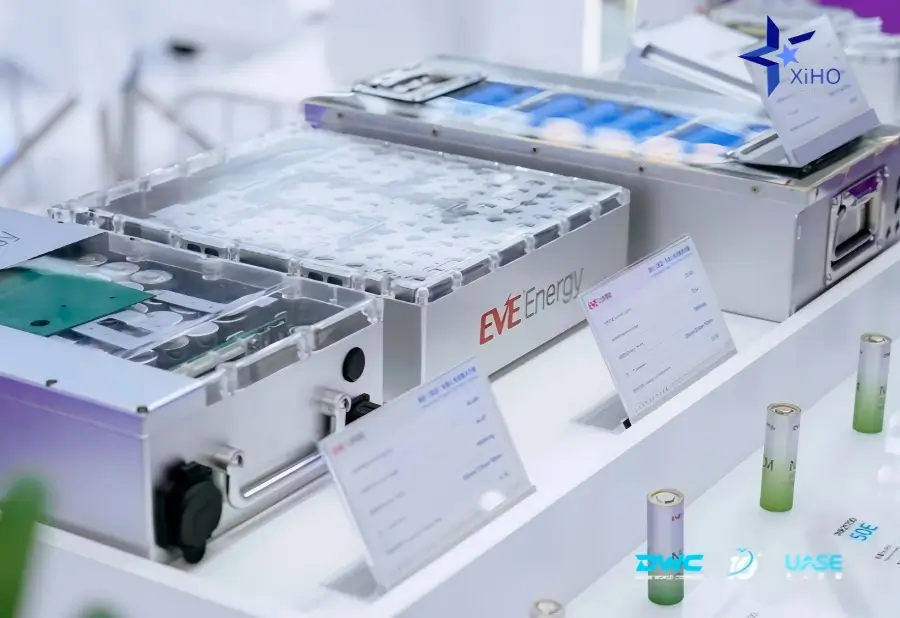 EVE Energy Showcases Energy Solutions at 2026 World UAV Expo
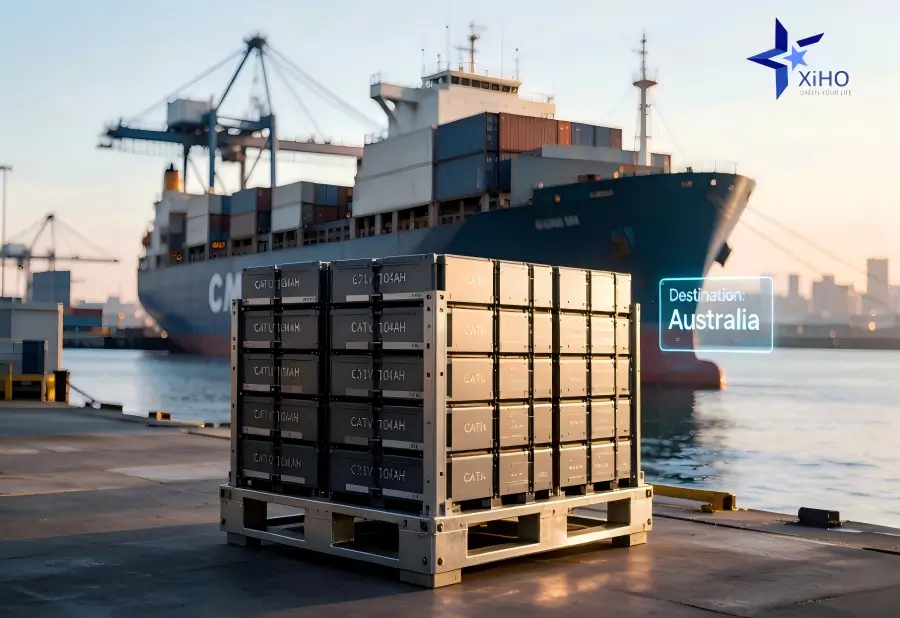 240 pcs of CATL 3.2V 104Ah LiFePo4 batteries to Australia
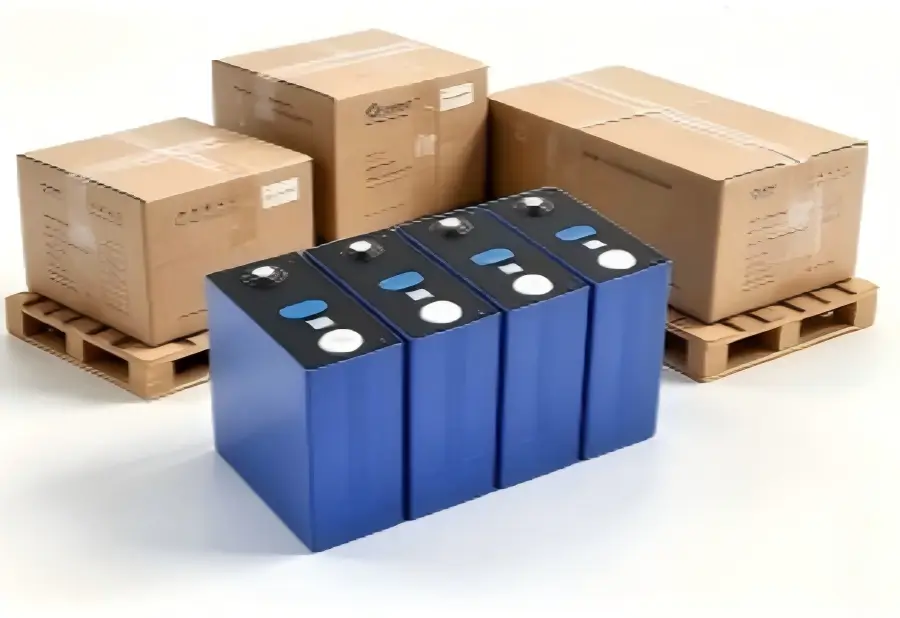 Sodium Ion Battery: The Emerging Energy Storage Solution for Global ESS & EV Projects
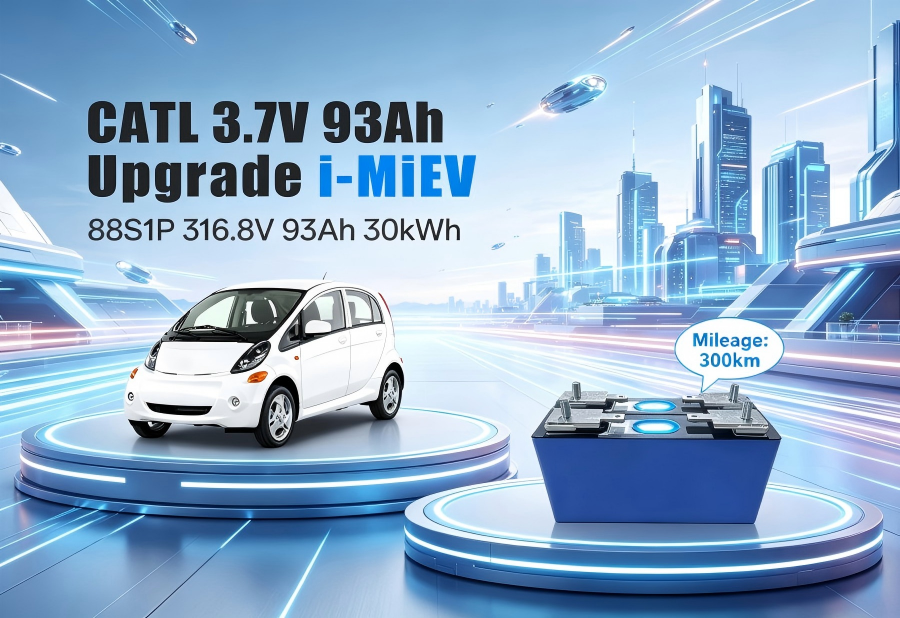 Adapting the i-MiEV Battery Pack for 93Ah NMC Cell Integration
